Monday, August 09, 2010

New Release: Bottomless Pit

With each release of a new record, there was a bit of a running joke among the small but highly devoted following of Silkworm: "It's their best album since the last one." While fans certainly had their favorite releases from the band, it was their way of acknowledging that being Silkworm fan meant buying into them totally. The band was remarkably consistant (not the same as static or repetitive) and loving one of their records more or less meant you had to love them all, as the band's essential qualities were present in everything they released. To do otherwise meant you were either extremely nitpick-y or didn't really like them all that much in the first place.

Songwriters Tim Midgett (bass/vocals) and Andy Cohen (guitar/vocals) retired the Silkworm name following the tragic death of drummer Michael Dahlquist at the hands of a reckless motorist in 2005. They subsequently formed Bottomless Pit with the rhythm section of Chris Manfrin and Brian Orchard. Midgett switched over to guitar, a move that made sense as he was playing more and more guitar on Silkworm's later albums. Mournful and cathartic, the band's initial releases were quite good but seemed a bit tentative in some ways, as though Midgett and Cohen were unsure on how to continue without their longtime collaborator (or, perhaps, even if they should.) Replicating the chemistry of a 15 year musical partnership couldn't have been the most unchallenging of tasks.

Bottomless Pit's latest album, Blood Under the Bridge, comes out today on the Comedy Minus One label. It's the band's most assured release to date, a record that finds Midgett and Cohen equaling the glory of their former group with apparent ease.

I've written extensively on Silkworm before (click here, if you care to read) and there are a few key differences in Bottomless Pit's sound, mainly the duel guitars. And Orchard wisely doesn't try to replicate Midgett's signature fat bass. But mostly everything that made Silkworm is present here. Midgett and Cohen are both in fine form as songwriters, offering some of the best tunes of their career.

Alternating between stately elegance and hard crunch (and equally adept at both), their songs evoke a kind of serene melancholy. Lyrics like "There's no such thing as too much time" ("Rhineland"), "A slip of the knife and, oh, we're in love" ("Summerwind") and "So many fuckers in this world" ("Late") suggest that some sadness is inevitable in the human experience and making peace with that is difficult but necessary. Instead of sliding into despair, the music offers hard fought redemption.

The group meshes beautifully. Midgett and Cohen finally seem comfortable in their new roles. Midgett's guitar provides foundation and Cohen's adds color. Cohen is justifiably known for his lengthy solos, which often flirted with excess and indulgence but worked perfectly. Here, he's mostly kept himself in check though he does get to stretch out a bit in the jaunty "Late" and the stomping closer, "38 Souls."

It's tempting to say that Blood Under the Bridge is Midgett and Cohen's best record since whatever Silkworm album happens to be your favorite. If you don't know Silkworm, it's equally tempting to throw out the names of a few of their records as essential entry points. However, Blood Under the Bridge is so excellent a piece of work, it would be fallacious to deny it's as good an introduction to Midgett and Cohen's work as any. Though there's been a fair amount of 90s indie rock nostalgia around of late, this record is far more vital than say, the Pavement reunion. I recommend its inclusion in your household as soon as possible.

Friday, August 06, 2010

Term Limit Up for Mayyors

It is my sad duty to report that one of the better bands to emerge the past couple of years, Sacramento's Mayyors, are calling it quits. The band's lack of web presence in the digital age (no website, no MySpace, no Facebook, no Twitter) gave them a certain mystique, which is sure to be enhanced even more by breaking up before releasing a proper full-length or going on a national tour.

I never got to see the Mayyors perform live as they never made a sojourn to the East Coast. If the three records they made during their short lifespan (all already highly collectable) are any indiction, they would have been something behold. Fortunately, a live set they recorded for WFMU at the 2009 SXSW has been preserved for posterity.

Since he actually got a chance to see them, I'll live it to Chunklet's Henry Owings to eulogize the band properly. And I'll leave it to these fan made (I'm pretty sure) videos to show why the Mayyors' handful of records got me as excited as any I'd heard in recent times:


The final Mayyors shows are as follows:
08.13.10 - pdx, or - SMMR BMMR @ Plan B w/Woven Bones, The Lamps, Wounded Lion, Meth Teeth, GGreen, Burning Yellows, Myelin Sheaths, Therapists, Manic Attracts, Fist City, $12, 21+, 6pm

08.14.10 - pdx, or - HOUSE PARTY @ 110 n. failing w/Jonny X & the Groadies, GGreen, Big Black Cloud, all ages, $5, 8pm

09.03.10 - daly city, ca - @ Serra Bowl w/Ty Segall, Culture Kids, Blasted Canyons, all ages, FREE, 8pm

09.05.10 - davis, ca @ d.a.m. house w/Thee Oh Sees, The Lamps, all ages, $5, 7pm
It would be more more or less impossible for me to make the Portland shows (despite a pretty incredible lineup for 8/13), but I may have to hitch it out to NoCal for that first weekend in September. Anybody in the area want to put me up for a few days?

Wednesday, July 28, 2010

Dr. Estranged Love or: How I Learned to Stop Worrying and Love Best Coast

Los Angeles's Best Coast are the latest beneficiary/victim of the buzz/backlash cycle that's become standard procedure in the web's music covering sector. As such, they are generally met with either ejaculatory praise or total disdain and dismissal. Both views are inherently suspect and depressingly predictable. Whether one is swept up by the hype or acrimonious toward it, the reaction is to the coverage rather than the music, and therefore of little value. (A little tip for the contrarians: listening to music with hostile ears doesn't do yourself or the act in question any favors.)

Best Coast's debut album Crazy For You was released yesterday on the Mexican Summer label. Rather than drown ourselves in positive or negative hyperbole, let's try and take a balanced approach, shall we?

It's easy to hear why people are excited about this band. Singer/songwriter Bethany Cosentino's melodies are infectious and instantly memorable. They evoke the affable West (if not best) Coast tunefulness of everyone from Phil Spector to the Bangles. The band's sunny hooks are tempered with a C-86/K Records-style naiveté, both in lyrics and production. Songs like "Goodbye," "When The Sun Don't Shine" and "Each & Everyday" work as both expertly crafted pop and bedroom-recorded intimacy. It's an effective, borderline irresistible mix.

On the other hand, there's also sound reasons for why one might be less than impressed with Best Coast. While individual songs are undeniably affecting, taken together they begin to feel more affected. I'm not necessarily doubting Ms. Cosentino's sincerity but "girl pines for boy" is Best Coast's only subject matter, and their take on it isn't particularly nuanced or revelatory. After a while, the songs on Crazy For You play less like genuine longing and more like what one is supposed to sing about for pop songs such as these. Between this and general lack of sonic variety, the album summons redundancy at a scant 31 minutes.

Ultimately, Crazy For You is a record that offeres easy pleasures. It's just that those pleasures aren't particularly deep. However, Best Coast make pop music, in the classicist sense. And whoever said that pop music has to strive for depth or significance? Probably the same type of clod who'd tell you that U2 is better than ABBA.

Recommended.

Monday, July 26, 2010

The Unblinking Ear Podcast: It's All A Dream

This podcast was made inside a dream. which was inside a dream, which was inside another dream. And my dead wife was there.

Was does it all mean?

I think means there are times when ambiguity is intended by the artist and you can't spend forever arguing over what the "right" answer is because isn't supposed to be one. You can, however, enjoy a tightly constructed action movie with a novel structure that becomes more silly the more you think about, so you'd better not.

Friday, July 09, 2010

The Unblinking Ear Podcast: The Power Is Back!

(Above: mankind's greatest invention)

New York City went through a pretty rough heat wave this week. One couldn't be blamed for looking over their shoulder to if a Yautja was hunting the urban landscape for Earth's deadliest game. ("Only in the hottest years this happens. And this year, it grows hot.")

A more pressing matter for me was the 12-hour blackout my block suffered through on Tuesday night/Wednesday morning. This not only meant that I was unable to DVR the third episode of Louie but it also prevented me from assembling this podcast in as timely a manner as I wanted. My apologies but you can see the situation was out of my control.

As for what happened the prior 6 weeks since I presented my last podcast that prevented me from making a new one... um... hmm. Would you believe that fantasy baseball is a highly-stressful, time consuming activity?


Download the latest The Unblinking Ear Podcast
Or Subscribe via iTunes

Wednesday, June 30, 2010

Obligatory Update: Mid-Year Roundup

So it's been quite a while since I've written anything for this blog. All I can offer is apologies and excuses. It's been a particularly busy period in my professional life and once the work day is over I'm pretty much unwilling and/or unable to further sit at a computer screen for any prolonged period of time. I don't know how more prolific bloggers do it. Then again, I don't know how they find the time to listen to deluge of crappy bands they listen to either. And it's particularly beyond me how they can enjoy them.

Anyway, since we're just about at the midway point of the year, I figured I might as well do a little round up of some of 2010's more worthy releases so far. Folks I know are always asking me what I've been listening to. I usually stammer, because that's what I do when put on the spot. (It's also just a little vexing, considering that I usually update this space fairly regularly and my podcast almost always highlights new releases.)

So you can consider the following a handy consumer's guide and pre-emptive chance to listen to some of this year's best records before they start appearing on end-of-year best-of lists. Well, my best-of list, at least. If you want to know what the music crit cognoscenti are listening to, I'd direct you to the Onion AV Club's own roundup, conveniently coupled with a discussion of already forgotten genetic engineering thriller Splice. While I generally value the AV Club's opinions on film, television and comics, their music coverage seems to fall in line precisely with the zeitgeist, and I personally find that pretty dull. That being said, anything that encourages one to listen to the Dum Dum Girls "Jail La La" (the head and shoulders highlight of their Sub Pop debut) is at least somewhat redeeming and I'll admit the new LCD Soundsystem album ain't half bad, even if it doesn't contain a moment as transcendent as "Someone Great."

It would seem that 2010 has been a fairly lean year thus far. Still, those who complain "there just isn't any good music anymore" or "all these new bands suck" or "there hasn't been a good record since I lost my virginity" are, as usual, not looking hard enough. There's always good stuff to be found if you care to find it. In particular, there was been three albums released this year that I feel are necessary addition to any record collection. Two I've reviewed in this space previously so I won't go into too much further detail on those.

Ted Leo and the Pharmacists latest album, The Brutalist Bricks is almost certainly their best record yet. On Leo's previous album, he seemed to be in danger of repeating (Bomb.Repeat.) himself. While one might level the same charge at his latest effort, it doesn't play that way. Rather, it feels as though he's consolidated all his strengths and has delivered the album he always had the potential to make. Read my full review here.

Tre Orsi's Devices + Emblems will likely take the award for 2010's best debut. Hell, I feel pretty confident calling it now. While the band certainly evokes a particular mid-1990s sound, they're no mere exercise in nostalgia. (Not that the indie kids of today have any frame of reference for music pre-1997 anyway.) Rather, it's a reminder that songcraft and emotional weight can be achieved without sacrificing sonic heft. Read my full review here.

The final album of this trio belongs to the Nothing People, who gave us their third album Soft Crash earlier this year. Unlike those above, I didn't give it a day-of review, mainly because their label, S-S Records, isn't the type of operation to do things like hire publicists, send pre-release MP3s for review or set release dates. I'm not complaining though. Given the quality of S-S releases the past couple of years, I'm perfectly content to have them continue doing things the way they do them.

Back to the Nothing People. Their debut, Anonymous, made my best-of list for 2008. Their second album, Late Night, was in some ways even better and surely would have made my best-of list for 09 had I bothered to make a proper one. Soft Crash, their third album in as many years, is better still. Such prolificness is impressive in and of itself but the substantial growth they've shown with each release in such a short period is simply astounding.

As with most truly exceptional bands, describing their music is a tricky proposition. I've casually called them psychedelic but I've decided this label is inappropriate. It's really only apt if you consider Pere Ubu's "30 Seconds Over Tokyo" to be the quintessential psych song. (I do, but I'm probably alone in that.) Others have compared the Nothing People to Chrome, which works to a degree. If nothing else, Chrome's self-attributed genre of "acid punk" fits the band quite well. The Nothing People take the first person agression of the id on journey through the dark recesses of the subconscious. Their excursions may float toward the ether but are tempered with an earthy bite and snarl. There are a few precedents. Ubu and Chrome, sure, but who else? This Kind of Punishment? Bad Moon Rising-era Sonic Youth? Jim Sheppard's more rocking moments? Hopefully, you get the picture (and the album.)

Beyond those three mighty and essential rekids, theres been plenty of other good stuff worth a listen. The Woven Bones' debut full-length is neat little slice of drone-fuzz and features a video you can feel good about embedding. Despite a middling review from the arbiter of taste for clueless white kids, Wounded Lion's self-titled debut seems to get better with each listen. Ditto for the New Pornographers' Together, which is probably their best album since Electric Version. Eddy Current Suppression Ring's new platter may not quite reach the heights of their previous disc but is still better than most of the records you heard this year. The Nervous Systems' Need Medicines is a delightful bit of distorto-pop that's good enough to make you forgive all the questionable "lo-fi" that's been foisted upon the public the past few years. Ty Segall takes a hard turn into 60s freakbeat on Metled and gives further credence to his rep as an artist to watch. Matador's Casual Victim Pile comp of bands from Austin and Denton, TX (featuring both Tre Orsi and Woven Bones) makes a compelling argument for relocating to the Southwest. I've only listened Naked on the Vague's Heaps of Nothing a handful of times thus far but I'm digging it quite a bit.

There's also a lot of stuff to look forward to in the coming months. Former Silkworm members Tim Midget and Andy Cohen will give us another album from their Bottomless Pit in August. Also in August, Grass Widow will release their second album and first for mid-sized indie Kill Rock Stars, so we can expect lots of attention from the chumps who ignored their debut. Speaking of KRS, they'll be releasing the debut album from former Sleater-Kinney singer/guitarist Corin Tucker's new band in September. And hell, maybe we'll even get the long-promised full-length from Nuevo León, Mexico's XYX on Siltbreeze.

So there you have it, a bunch of music that you'll probably find more rewarding than MGMT name-dropping a former member of Roxy Music. And if you don't, this probably isn't the blog for you, boyo.

Tuesday, June 08, 2010

New Release: Tre Orsi

Before I contented myself with making podcasts for solitary listening, I used to be a DJ. That is, I used to play pre-recorded music in a public space for the pleasure (or displeasure) of whomever was in the particular venue at the time. One record (well, double CD, factually) I always had on standby was What's Up, Matador? In my mind, it's one of the finest rock compilations of all time. It's almost certainly the best rock comp of the 90s, beating out strong contenders like Abridged Perversion and the Clueless soundtrack.

What's Up, Matador? was not intended to be an overview of its era but simply a cheap sampler of bands on the Matador label through its first five years. Nonetheless, it plays like it's comprehensive: the definitive statement on pre-OK Computer/pre-Strokes/pre-suburban-emo-explosion indie rock. Disparate bands making different sounds, sharing some common influences and a commitment to doing it their own way. If grunge was America's punk and 1990s alt-rock its new wave, then WUM? was its Wanna Buy a Bridge?

While one of WUM?'s strengths is its variety and it's unlikely that any of its bands sought to sound like each other or even behold themselves to the parameters of a genre, there is an inescapable if almost intangible sonic kinship to some of the songs. Heartfelt without histrionic over-emoting. Cerebral with out being clinical. Melodically dynamic and instrumentally expressive without forgetting to bring the rock. (And usually mid-tempo.) You could hear it in songs like Yo La Tengo's "Tom Courtney," Liz Phair's "Stratford-On-Guy" and Silkworm's "Couldn't You Wait." You could hear it in cuts from non-Matador bands of the era, like Sebadoh's "The Freed Pig," Polvo's "Tilebreaker" and Versus' "Bright Light." I certainly wouldn't use the term "generic," but it was prevalent enough that I, however naively, considered it to be the "indie rock sound." That is, if someone said they were into indie rock at the time, that's the sound of which I thought they were speaking. And they usually were, more or less. (Nowadays when someone says they're into "indie," I have no clue what they like. But that's a story for another time.)

So why am I talking about one record when I'm ostensibly reviewing another? When I heard "The Engineer" from Denton, TX band Tre Orsi on the Casual Victim Pile compilation (coincidentally [or not] released on Matador 16 years after WUM?) earlier this year, it brought back a flood of warm memories of a bygone era. It wasn't so much the comfort of nostalgia as it was the thrill of rediscovery of a lost art, the head-slapping thought "Why don't more bands sound like this?" As good as Casual Victim Pile was (and it was quite good), "The Engineer" was head and shoulders the standout out track. I couldn't wait to hear more from Tre Orsi.

Today is the digital release of their debut album Devices + Emblems on the Comedy Minus One label. (The vinyl came out a few weeks ago.) "The Engineer" is here along with 8 (on the LP, 10 on the download) other tracks that prove this is a band worthy of your attention. I may have given the impression that Tre Orsi is merely some revivalist act. This is not the case. If they wanted to go that route, they could simply drive headfirst into cliche, which they thankfully avoid. Rather, the trio uses their influences as a foundation for their own style, simultaneously muscular and melancholy. That they could reclaim the soft/loud dynamic from nearly 20 years of terrible post-grunge and spin it into something distinctly their own on a song like "Best Kind of Failure" is nothing short of remarkable. I could cite other tracks as fine examples of their craft but, frankly, it seems a little redundant. There's simply not a bad one in the bunch.

In his review of this album for Dusted (which I'll freely admit is probably more convincing than this one), Doug Mosurock concludes "The notion of ‘90s indie rock might as well be folk music (or at least the sort of folk music we looked down upon in the ‘90s) but goddamnit, this is my folk music, and I’m sure more than a handful of you wouldn’t argue that it’s yours, too." I certainly concur, but I'll take it a step further. Devices + Emblems is one of the year's best albums. A subjective notion, sure. But if you wanted objective relevance you could head over the Hype Machine and let the algorithms steer you toward what's hot. I'm just a human recommending some human music. (Hey! That's another awesome comp!) Your reward is the same as mine.

Friday, May 21, 2010

The Unblinking Ear Podcast: The Terrible Twos

(Above: A fearsome twosome)

With this post, I have now been doing my podcast for just over two years.

I don't expect recognition of this anniversary that Google granted Pac-Man today.

If you want to buy me a piece of cake, I will gladly eat it.

Or you can follow me on Twitter, which I'm doing now because it's 2010 and you have to.


Download the latest The Unblinking Ear Podcast
Or Subscribe via iTunes

Tuesday, May 18, 2010

Used Bin Ubiquitous Bargains: The Blasters

Used Bin Ubiquitous Bargains is a new feature wherein I recommend LPs I frequently see fallowing in the used bins of record shops despite their quality and reliably low sticker price. They are the albums you can find easily, will only set you back 5 beans or less and are probably better than the whatever the hype machine is praising this week.

The Blasters' self-titled album is a perfect candidate. It was popular enough to make it all the way up to #36 on the Billboard chart on 1981, thus many copies are in circulation. Plus, I'm sure those who haunt record shops are unlikely to take a chance on the album based on the cover, which has to be one of the ugliest in rock history. It looks like an unskilled artist was airbrushing the cover of the first King's Crimson album from memory on to the back of somebody's jean jacket. Ironic, considering the Blasters play pretty much the aesthetic opposite of King Crimson's prog rock.

While the Blasters are usually referred to as "rockabilly," that's not strictly true. "Rockabilly" has become a sort of shorthand for all pre-British Invasion rock n' roll, encompassing 50s country, blues, roadhouse R&B as well as legitimate rockabilly. The Blasters draw from all these styles and do so exceptionally well. While their recreation of early rock n' roll is certainly derivative, it never comes off as pandering or as mere affection, as it does with, say, the Stray Cats or someone. Rather, it plays like a celebration of "American Music," to borrow the title of one of the band's more popular songs. The enthusiasm the band has for the source material is both obvious and infectious.

Despite their traditionalist bent, the Blasters were birthed through the L.A. punk scene of the late 70s and early 80s. Singer/songwriter/guitarist Dave Alvin actually did stints in X and the Flesh Eaters. While this may strike some as somewhat surprising, it actually makes a world of sense. The L.A. scene was extremely open minded went it came to supporting different kinds of music and was especially interested in the primitive hoodoo of early forms of rock n roll as the antithesis of the bloated sounds of 70s mainstream rock. Alvin, for his part, has stated that he was inspired just as much by seeing Johnny Rotten on TV as he was by Johnny "Guitar" Watson and Chuck Berry. (A dubious claim but we'll take him at his word.) While bands like X and the Gun Club infused their love of vintage rock n' roll and blues with a more aggressive sound, the Blasters happily played it straight. As the most conventional band in the scene, it's unsurprising they were the most commercially successful. Their moderate fame foreshadowed the rise of "roots music" and "Americana" in mid-80s mainstream rock in the forms of Springsteen, Mellencamp and their ilk. This was partially a reaction to the popularity of the stylized new wave groups that were dominating MTV at the time, commonly and pejoratively referred to as "English hair bands." (SST's Joe Carducci humorously surmised the situation as "flag wavers vs fag wavers.") More insidiously, another factor may have been the nostalgia for an idealized 1950s-that-never-existed were so prevalent in Reagan's America.

Regardless of socio-political content, The Blasters is probably the only musical relic of the 80s infatuation with the 50s that you need to own. Below are two cuts from the album: their version of Little Wille John's "I'm Shakin" (one of many covers in the Blasters' repertoire) and the original "So Long Baby Goodbye." If you want to hear more, you'll undoubtedly find The Blasters in a used LP bin near you for a very reasonable price. And if you're lucky, your copy will include a one page catalog for Slash Records merchandise. A Decline of Western Civilization blue v-neck t-shirt? Where do I send my money?

Monday, May 17, 2010

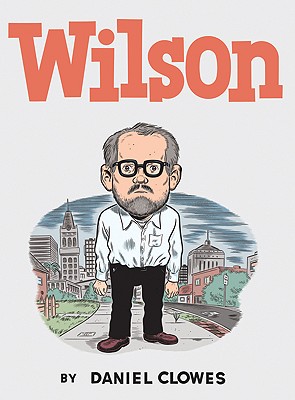
The Many Misanthropic Moods of Wilson

I'm going to take a break from the usual music coverage offered in this space (not that the music coverage is so prolific that it needs a break) to discuss one of the few other subjects about which I know something, comics. In particular, the recently released graphic novel, Wilson.

Wilson is the first stand alone comics work from Daniel Clowes in six years. To non-comics fans, Clowes is probably best known as the creator of Ghost World, both as the author and artist of the original graphic novel and the screenwriter of its successful film adaptation. However, to those who follow his medium, Clowes is one of the most renowned comics-auteurs, his work among the most influential in independent comics. As his first major work after his extended furlough (aside from a series of single page comics that appeared in the New York Times magazine) anticipation for Wilson was perhaps impossibly high. While it may initially feel like a bit of disappointment in that context, Wilson is throughly rewarding on its own merits.

In Wilson, Clowes reuses the single page format from his Times work, Every page is a "gag strip." That is, each page is set up as its own little story, building to a punchline in the final panel. Taken together, the strips form a years-spanning narrative for its title character, a miserable middle-aged misanthrope who incorrectly identifies himself on the book's opening page as a "people person." One might assume that Clowes is deconstructing (or re-constructing?) the Sunday newspaper cartoon strip, suggesting that individual strips are fragments of a greater character arc.

However, unlike the affable characters one usually finds the in the Sunday funnies, Wilson has to be one of the more aggressively unlikeable protagonists in fiction. Within a few pages, he reveals that he left his wife while she was pregnant, torments his former in-laws and starts conversations with strangers only to berate them. Wilson is a smug, deluded blowhard and the book wrings a lot of laughs from his interactions with the world. In one of the book's funniest sequences, Wilson pontificates away typically until another character finally divulges her feelings of deep ambivalence toward a family member. After this gut-wrenching revelation, Wilson's response is a flippant "Hey! It talks!" It's refreshing to see Clowes employ his trademark twisted sense of humor again. While his recent work like Ice Haven, David Boring and The Death-Ray were widely (and justly) acclaimed, there was little trace of the man who gave the world hilariously warped comedy pieces like "Sensual Santa" and "Needledick, the Bug Fucker." While Wilson is not a pure "humor" book by any stretch, it's good to see Clowes hasn't lost his touch when comes to bringing the funny.

One could easily spend hours contemplating the implications of Wilson's empathy-discouraging eponymous character, just as one could with protagonists from similar cringe-comedies like Curb Your Enthusiasm or The Office. But its format is what's most awe-inspiring about Wilson. Clowes has used a somewhat similar formula before. Ice Haven was built on a series of strips which, at first, only seemed to be tangentially related but eventually added up to a whole narrative. However, he has not attempted a format quite as rigid as this before. Yet he mines a surprising amount of depth out of what would seem to be a very limiting structure. Details that are seemingly minor have major effect later on. Key information is held back and when revealed makes the reader view the prior pages in a whole different light. The fact that each page works individually while the whole works collectively is nothing short of stunning.

Clowes further showcases his skill by shifting his drawing style throughout the book. Some pages are in a simple, cartoony Peanuts-style. Others are more detailed, inching closer to photorealism. And there's all manner of degrees in between. Yet every panel is distinctively Clowes. A minor gripe is that while the breadth of styles is impressive, in no way does it inform or enhance the story. Unlike a book like David Mazzucchelli's Asterios Polyp, where the way certain characters were drawn were as essential to their nature as the text, here the different visual styles seem to serve no purpose other than for Clowes to dazzle the reader with his ability. There's nothing wrong with that, per se, and the variety probably makes Wilson a more exciting read than if it had been drawn in a uniform style. But it seems like a bit of missed opportunity. Some have commented that there is a rationale for the style of each page, saying that more cutesy the rendering, the more the characters are suffering. Perhaps it's my ignorance, but I see no evidence of any correlation.

For those unfamiliar with Clowes' work, Wilson is probably not the best place to start. (Get yourself a copy of Ice Haven and proceed from there.) However, it's highly recommended to both fans of Clowes and fans of independent comics in general. The preceding sentence might be a bit redundant. Such is Clowes' legacy that those two groups are more or less synonymous.

Thursday, May 06, 2010

Out of Print (Bootleg Vinyl) Relics: Killed By Death- British D.I.Y.

Though I'd like to think that everyone who reads this blog is on the exact same wave-length as me, I feel that it would probably be best if I explained both halves of the subtitle of this post.

Killed By Death is series of bootlegs collecting extremely rare vintage punk singles, mirroring the model used by the Pebbles series for rare 60s garage rock. The debut volume appeared in 1989 and while it wasn't the first collection of rare late 70s/early 80s punk rock, it was the first of it's kind to spawn sequels. The first four were were put together by the same compiler and were hugely popular with punk collectors. Despite making household names out of the likes of Mad Virgins and Ebenezer and the Bludgeons, said compiler eventually dropped the project.

A few years later, another enterprising soul realized that since the series was quasi-legit (at best) bootlegs, the original complier had no rights to the name Killed By Death. So, this soul put together his own collection of rare punk and slapped Killed by Death 5 on the front. Thus, the floodgates opened and soon every punk collector with a few elusive singles in his collection was putting out a Killed By Death of his own, numerical consistency and quality control be damned. For the inside scoop on this phenomenon from one of the many bootlegers, click here.

The series peaked in the mid-90s, with over 20 seperate editions of KBD (not to mention numerous other comps with different monikers) coming out between 1995 and 1998 alone. Its impact on the garage punk scene of the mid 90s (soon to memorialized in Eric Davidson's We Never Learn) cannot be overstated. Eventually, the series petered out as the law of diminishing returns set in. There were only so many insanely-awesome, insanely-rare punk rock stompers to be unearthed.

In 1998, one compiler decided to go a slightly different route. While the well was running dry on punk singles, its artier but just as amateurish offshoot, D.I.Y. ("do-it-yourself"), was all but undocumented. So this compiler assembled this collection and renumerated the series at "Vol. 1," joking there was no way to tell which volume of the Killed By Death series was "next," so he just decided to start over again.

As for what D.I.Y. is... well, a less than elucidatory shorthand is that it's not that dissimilar to "post-punk," as that term is conventionally understood. It's actually a subset of post-punk though it tends to be more ramshackle and is much less likely to have had any kind of corporate backing than other varieties. For that matter, it's less likely to have had any kind of music industry connection at all. I'll leave it to Chuck Warner, the creator of the Messthetics series, to explain much more conclusively:
Messthetics is about something truly important and vital that really DID happen after the punters took up the cry of "punk is dead" (And no, we don't mean Joy Division.) And in its way, DIY was just as revolutionary as punk.

However proletarian punk was at the musician level (say, 70% in the U.K., 2% in the U.S.), it became business-as-usual almost instantly in terms of manufacturing and marketing. Sure, Stiff and Radar stayed independent for a couple of years, but even before the Sex Pistols got to EMI or A&M, they were cutting acetates at Abbey Road.

The Desperate Bicycles set the initial standard for the Do It Yourself alternative. To cut mastering costs in half, they pressed the same two songs on either side of their first two singles (August '77 and Feb. '78), and they recorded in one take. Younger fans may be surprised at their printed sleeves and labels [one side only, natch], but in 1978, both letter-press and offset printing were cheaper than photocopying, even in quantities of a couple hundred (although a surprising number of UK DIY 45s came in editions of 1000 or more). But the true rallying cry of DIY came from the 'Bicycles' "The Medium Was Tedium:" "It was easy. It was cheap. Go and do it!"

While punk fizzled in '78 in a wave of tunelessness and gobbing, more timid bands either plugged away at over-hyped (and again, tuneless) skinny-tie pop [Pleasers, Boyfriends] or diluted whatever other fresh ideas they might have had with ever-more expensive gear and slicker production values. So meanwhile John Peel and others were only too happy to play and promote the rising tide of self-produced, home-made vinyl. (The U.K. listings for Volume were chiefly compiled from Mr. Peel's archives: if a DIY record is not listed, chances are good that the band never sent him one.) But back to budgetary matters:

Bands were more likely to list their production costs than to list their band-members' names. They were highly competitive about the former...and quite egalitarian about the latter, which were frequently given only as indeterminate three-letter grunts: Gez, Baz, Kaz, Daz, Loz, Tag, Jaf, Nik, Nag, etc. (This annoying habit became a veritable art form in the Oi era, of course.)

A great deal of the DIY "sound" is characterized by wheezy unreliable keyboards. Since they'd gone utterly out of fashion and/or having been superceded by newer electronics, Voxx Continentals and Rolands and Farfisas and Fender-Rhodeses and even a few Hammonds had become as cheap or cheaper than guitars in 1978. And every crappy studio still had a rattly old piano in the corner. Other common non-punk elements are hippie-psychedelic guitar chops, and bass-lines lifted rather directly from JJ Burnel of the Stranglers (an underappreciated genius of some magnitude). Oh yeah, and hardly anyone ever worried about their tunings or musicianship...

Messthetics posits a DIY-centric universe, so this series is inclusive, not exclusive. For instance, after the DIY sound had been around for a while, certain more established or commercially successful bands began to record songs that were musically indistinguishable from the real thing. They're here. Likewise, a bunch of DIY bands recorded straight-ahead punk songs (that regularly turn up on KBD-style comps). And some of those are here, too.
This KBD volume is possibly the first attempt to contextualize this movement, predating Chuck's Messthetics. It's by no means definitive. D.I.Y. stalwarts Desperate Bicycles, the Homosexuals and early Scritti Politti are not present. Still, it's a fine introduction, collecting many excellent sides from UK D.I.Y. bands (and a ringer from New Zealand) released between 1978 and 1981. It's also one of the few Killed By Deaths not already uploaded on the web by somebody which is why I'm sharing it with you all now.

Below are a couple of representative tracks and a link to download the full album. If you like what you hear, I highly recommend you purchase one (or several) of the Messthetics comps. You can also check out the frequently-Googled post I made many moons ago on the Four Plugs, whose "Biking Girl" is #12 on an entrepreneurial gentleman's list of the top 100 D.I.Y. singles. If you're interested in the Killed By Death series as a whole, there are some fairly comprehensive lists of it and other like-minded collections like Bloodstains available online. Caveat emptor: later volumes of the series are rather dire. Stick with the first four and proceed with caution from there.

Tuesday, May 04, 2010

The Unblinking Ear Podcast: In Lieu of a Review...

...here's some actual music.

Yes, it's a Tuesday. And perhaps some of you thought I might be featuring a new release. Certainly, one or two were worth mentioning. However, you probably know about them already and I generally prefer to devote this space to records that are a bit more under the radar (or, alternately, records about which I think have something particularly interesting to share.) This is sort of ironic considering that this blog is probably much more obscure than the bands themselves.

Or maybe it's just a cynical attempt to generate Google hits with timely material and offer a little quid pro quo to the publicists who keep generously sending me albums. That's something to think about as you listen to the music below.


Download the latest The Unblinking Ear Podcast
Or Subscribe via iTunes