Showing posts with label Out of Print Digital Relics. Show all posts

Monday, October 04, 2010

Out of Print (Not Exactly) Digital Relics: Toiling Midgets

When I write "San Francisco punk," most may think of 924 Gilman St scene, ironically both a paragon of anarcho-socialist punk orthodoxy and a breeding ground for future millionaires. Despite this claim to fame, the city by the bay has never really gotten its due as one of the first in America to fully embrace punk.

Given the city's open-mindedness and tolerance of the transgressive, punk rooted in SF early and got weird fast. Locals Crime released their first records before many prominent UK acts such as the Clash and the Jam. Outsider/bizarro rock acts like Chrome and the Residents were operating pre-punk but found both new directions and new audiences thanks to the new wave. The Dead Kennedys became favorites with the hardcore crowd and the Avengers' records garnered some acclaim from the rock press. However, the most interesting punk coming out of San Francisco was from an axis of bands who shared some members and more than a few musical ideas: Flipper, Negative Trend, The Sleepers and Toiling Midgets.

All these bands fused the spirit of experimentalism of the original CBGBs bands and UK post-punk outfits with the more aggressive approach favored by the new breed of punk bands popping up all over the U.S. None received much attention nationally except for Flipper, who toured a bit and got some posthumous recognition when Kurt Cobain sported their t-shirt of Saturday Night Live. Still, Negative Trend had their sole release, a 4 song EP, reissued by Henry Rollins and the Sleepers had a complete discography released in the mid-90s (which is out of print but available cheap). The only one of the bunch whose best work remains buried is Toiling Midgets.

Featuring the unmistakable and inimitable vocals of the Sleepers' Ricky Williams, Toiling Midgets released their debut LP, Sea of Unrest, in 1982. It was reissued on CD briefly in 1994 but quickly fell out of print and is now extremely difficult to find. This is a shame as it's one of the finer slices of U.S. post-punk. The album features many of the sonic motifs of the Sleepers' material, which Jon Savage dubbed "the sound of the unconscious". In some ways, it actually sounds like more of a continuation of the sound of the Sleepers' brilliant debut EP than that band's more muted (if wonderful in its own way) album. As befits a band from San Francisco, Toiling Midgets achieve a nearly psychedelic grace though more in the psychological sense of the word than the musical one. Besides, you'd never mistake the band's pummeling rock for Haight-Ashbury flower power anyway. If you thought that Joy Division were at their best before they went into the studio with Martin Hannett, Sea of Unrest is the record for you.

Following the album's release, Williams quit and the band released a mostly instrumental album the following year before splitting up. They reformed in in 1989 with American Music Club's Mark Eitzel on vocals and released the album Son on Matador, 10 years after their debut. The band appears to be a semi-active concern at this point. There's what appears to be an official MySpace for your perusal.

Though it was reissued on CD, the following rip of Sea of Unrest comes from the original vinyl source as I don't have a copy of the CD. When and if I obtain one, I may replace these MP3s. I've tried my best to remove any surface noise from the recording while leaving the wanted noise of the music intact.


Download Toiling Midgets Sea of Unrest

Thursday, May 06, 2010

Out of Print (Bootleg Vinyl) Relics: Killed By Death- British D.I.Y.

Though I'd like to think that everyone who reads this blog is on the exact same wave-length as me, I feel that it would probably be best if I explained both halves of the subtitle of this post.

Killed By Death is series of bootlegs collecting extremely rare vintage punk singles, mirroring the model used by the Pebbles series for rare 60s garage rock. The debut volume appeared in 1989 and while it wasn't the first collection of rare late 70s/early 80s punk rock, it was the first of it's kind to spawn sequels. The first four were were put together by the same compiler and were hugely popular with punk collectors. Despite making household names out of the likes of Mad Virgins and Ebenezer and the Bludgeons, said compiler eventually dropped the project.

A few years later, another enterprising soul realized that since the series was quasi-legit (at best) bootlegs, the original complier had no rights to the name Killed By Death. So, this soul put together his own collection of rare punk and slapped Killed by Death 5 on the front. Thus, the floodgates opened and soon every punk collector with a few elusive singles in his collection was putting out a Killed By Death of his own, numerical consistency and quality control be damned. For the inside scoop on this phenomenon from one of the many bootlegers, click here.

The series peaked in the mid-90s, with over 20 seperate editions of KBD (not to mention numerous other comps with different monikers) coming out between 1995 and 1998 alone. Its impact on the garage punk scene of the mid 90s (soon to memorialized in Eric Davidson's We Never Learn) cannot be overstated. Eventually, the series petered out as the law of diminishing returns set in. There were only so many insanely-awesome, insanely-rare punk rock stompers to be unearthed.

In 1998, one compiler decided to go a slightly different route. While the well was running dry on punk singles, its artier but just as amateurish offshoot, D.I.Y. ("do-it-yourself"), was all but undocumented. So this compiler assembled this collection and renumerated the series at "Vol. 1," joking there was no way to tell which volume of the Killed By Death series was "next," so he just decided to start over again.

As for what D.I.Y. is... well, a less than elucidatory shorthand is that it's not that dissimilar to "post-punk," as that term is conventionally understood. It's actually a subset of post-punk though it tends to be more ramshackle and is much less likely to have had any kind of corporate backing than other varieties. For that matter, it's less likely to have had any kind of music industry connection at all. I'll leave it to Chuck Warner, the creator of the Messthetics series, to explain much more conclusively:
Messthetics is about something truly important and vital that really DID happen after the punters took up the cry of "punk is dead" (And no, we don't mean Joy Division.) And in its way, DIY was just as revolutionary as punk.

However proletarian punk was at the musician level (say, 70% in the U.K., 2% in the U.S.), it became business-as-usual almost instantly in terms of manufacturing and marketing. Sure, Stiff and Radar stayed independent for a couple of years, but even before the Sex Pistols got to EMI or A&M, they were cutting acetates at Abbey Road.

The Desperate Bicycles set the initial standard for the Do It Yourself alternative. To cut mastering costs in half, they pressed the same two songs on either side of their first two singles (August '77 and Feb. '78), and they recorded in one take. Younger fans may be surprised at their printed sleeves and labels [one side only, natch], but in 1978, both letter-press and offset printing were cheaper than photocopying, even in quantities of a couple hundred (although a surprising number of UK DIY 45s came in editions of 1000 or more). But the true rallying cry of DIY came from the 'Bicycles' "The Medium Was Tedium:" "It was easy. It was cheap. Go and do it!"

While punk fizzled in '78 in a wave of tunelessness and gobbing, more timid bands either plugged away at over-hyped (and again, tuneless) skinny-tie pop [Pleasers, Boyfriends] or diluted whatever other fresh ideas they might have had with ever-more expensive gear and slicker production values. So meanwhile John Peel and others were only too happy to play and promote the rising tide of self-produced, home-made vinyl. (The U.K. listings for Volume were chiefly compiled from Mr. Peel's archives: if a DIY record is not listed, chances are good that the band never sent him one.) But back to budgetary matters:

Bands were more likely to list their production costs than to list their band-members' names. They were highly competitive about the former...and quite egalitarian about the latter, which were frequently given only as indeterminate three-letter grunts: Gez, Baz, Kaz, Daz, Loz, Tag, Jaf, Nik, Nag, etc. (This annoying habit became a veritable art form in the Oi era, of course.)

A great deal of the DIY "sound" is characterized by wheezy unreliable keyboards. Since they'd gone utterly out of fashion and/or having been superceded by newer electronics, Voxx Continentals and Rolands and Farfisas and Fender-Rhodeses and even a few Hammonds had become as cheap or cheaper than guitars in 1978. And every crappy studio still had a rattly old piano in the corner. Other common non-punk elements are hippie-psychedelic guitar chops, and bass-lines lifted rather directly from JJ Burnel of the Stranglers (an underappreciated genius of some magnitude). Oh yeah, and hardly anyone ever worried about their tunings or musicianship...

Messthetics posits a DIY-centric universe, so this series is inclusive, not exclusive. For instance, after the DIY sound had been around for a while, certain more established or commercially successful bands began to record songs that were musically indistinguishable from the real thing. They're here. Likewise, a bunch of DIY bands recorded straight-ahead punk songs (that regularly turn up on KBD-style comps). And some of those are here, too.
This KBD volume is possibly the first attempt to contextualize this movement, predating Chuck's Messthetics. It's by no means definitive. D.I.Y. stalwarts Desperate Bicycles, the Homosexuals and early Scritti Politti are not present. Still, it's a fine introduction, collecting many excellent sides from UK D.I.Y. bands (and a ringer from New Zealand) released between 1978 and 1981. It's also one of the few Killed By Deaths not already uploaded on the web by somebody which is why I'm sharing it with you all now.

Below are a couple of representative tracks and a link to download the full album. If you like what you hear, I highly recommend you purchase one (or several) of the Messthetics comps. You can also check out the frequently-Googled post I made many moons ago on the Four Plugs, whose "Biking Girl" is #12 on an entrepreneurial gentleman's list of the top 100 D.I.Y. singles. If you're interested in the Killed By Death series as a whole, there are some fairly comprehensive lists of it and other like-minded collections like Bloodstains available online. Caveat emptor: later volumes of the series are rather dire. Stick with the first four and proceed with caution from there.

Monday, November 23, 2009

Out of Print Digital Relics: The Chosen Few


I've posted a handful of these Out of Print Digital Relics but I haven't done one for a while. This is because it seems like pretty much every album I've considered posting has already been posted elsewhere by someone else. (Even This Kind of Punishment.)

However, I recently was talking with some friends of mine about the recent Death reissue, and opined that if they dug that band's reworking of vintage Detriot rock action, they really needed to hear Australia's the Chosen Few. Alas, the band's mammoth The Joke's On Us EP was no where to be found on the internet. I could have sworn I had seen it before. Perhaps the Chosen Few are litigious types. (I guess I'll find out soon.)

In any case, The Joke's On Us, the Chosen Few's only release, is definitely on my list of top 10 punk rock singles of all time. (I included a cut from it on one of my all punk podcasts.) It's an absolutely vicious take on the Detriot sound, surely learned by way of Radio Birdman's Dennis Tek. It has all the nasty guitar riff-age one might expect but it's played in ferocious manner akin to early US hardcore. It's like the soundtrack to a riot erupting at the pub. The Joke's On Us is right up there with the Negative Approach single as one of the purest expressions of sonic violence ever committed to vinyl.

The EP is included in its entirety as the first six tracks on the Root & A Beer CD. The remainder of the collection is made up of never-released studio and live cuts, including covers of the similarly minded Radio Birdman, Johnny Moped and Coloured Balls. As you're listening to it, head on over to breakmyface.com to read a much more thorough history of the band.


Download The Chosen Few Root & A Beer

Thursday, March 05, 2009

Out of Print Digital Relics: Rainy Day


It's sort of difficult to quantify the importance of the "paisley underground" scene of early-80s Southern California. It seemed as though most of the associated groups released a terrific debut and then lost the plot, putting out records that were neither artistically nor commercially successful. (The exception being the Bangles who slicked up their sound and became pop stars.) However, this small scene's influence on independent rock was crucial. In the early 80s, the year-zero, destroy-everything mentality of punk was still prominent. Post-punk artists were loath to trust any music made before the Ramones debut, especially if it had the taint of "hippie." Bands like the Dream Syndicate and Rain Parade showed by example how to embrace the music of the 60s without retrogressive trappings, thus expanding the sonic palette of indie rock. It's arguable that the mid-decade breakthroughs by R.E.M., Hüsker Dü and the Replacements would not have been possible had the paisley underground bands not set precedent. It's even been said that J Mascis listened to a lot of True West in between Deep Wound and Dinosaur.

On the other hand, there's a direct lineage from the paisley underground to alt-country, so nobody's perfect.

The Rainy Day album is not the best artifact of the scene (see the Dream Syndicate's Days of Wine and Roses for that) but it's a neat one. Spearheaded by David Roback of Rain Parade and Opal (and later of Mazzy Star), the album was a "super session" of various members of paisley underground groups paying direct homage to their influences, covering songs by Bob Dylan, Buffalo Springfield, the Who, Hendrix, the Velvet Underground and 70s ringer Big Star as well as "covers of covers" by way of the Beach Boys and the Byrds. Not all of the performances are top notch but all are enjoyable and the Bangles' Susanna Hoffs' take on Dylan's "I'll Keep It With Mine" might be the definitive version.


Download Rainy Day

Wednesday, January 07, 2009

Out of Print Digital Relics: Subway Sect


Subway Sect
We Oppose All Rock and Roll
One of the first ever British punk bands, the Subway Sect are sadly underrepresented by their recorded output. Gigging as early as 1976, the band was managed by Clash manager Bernard Rhodes and one suspects his commitment to that band may have kept the Subway Sect off vinyl. The band managed to released a pair of singles in 1978 but also recorded an album's worth of material which has never come to light and is quite possibly lost forever. Subsequently, all members of the band were fired except singer Vic Godard, who formed a new version of the Subway Sect. This incarnation put out the Subway Sect's late debut, What's the Matter, Boy?, in 1980, featuring drastically reworked versions of the band's early material.

It's a shame, as at their finest the Subway Sect reveled in abstraction in way very few Brit-punk bands did at the time, predating the cool detachment of post-punk by a couple of years. When their peers were pogoing to the blueprint of the first Ramones album, one might imagine Godard and co. spinning "Little Johnny Jewel" repeatedly. While they certainly didn't have Television's chops, Subway Sect perfectly capture an important aspect of the punk movement that's all too often overlooked in favor of clichéd notions of rebellion: creative people inspired to use rock music as a medium to express their ideas, instrumental proficiency be damned.

There have been a few attempts to anthologize the band. Rough Trade released A Retrospective (1977-81) in 1985 and in late 90s there was a double CD summarizing all of Godard's musical activities though it seems to have fallen out of print. For you, I present We Oppose All Rock and Roll, a CD reissue of Rough Trade collection from the Overground label. The first six tracks come from the original band: both of their singles and two unreleased cuts, "Parallel Lines" and "Chain Smoking." (If you care about such things, it's worth nothing that the former was included in the Pitchfork 500.) I can't tell you where they come from since the CD booklet has little to no information but I'd assume they're either from the lost album, outtakes from the singles or perhaps BBC sessions. The final six tracks feature later versions of the band. Four are from a 1979 Peel session and retain much of the old group's fire. The remaining two are examples of Godard's pop (post-rock?) aspirations. The otherwise unreleased "Spring is Grey" is middling but "Stop That GIrl," from a 1981 single, is stunner. Backed by the Black Arabs (the band that did the disco versions of Sex Pistols songs for The Great Rock n Roll Swindle), Godard's croons sweetly and sincerely enough to make you a believer.

The first 2000 copies of We Oppose All Rock and Roll came with a bonus 3 track CD of songs from the lost album, which I've included. The fidelity is terrible but judging from what other bits of the album have surfaced, it's likely as good as can be expected. Godard actually reassembled the Sect a couple of years ago to rerecord the lost album in its entirely as 1978 Now. I haven't heard it though I would guess it still isn't the same as hearing the group in their prime. Sometimes one just has to come to terms with the fact that some things are just gone forever.

Download Subway Sect We Oppose All Rock and Roll

Wednesday, November 19, 2008

Out of Print Digital Relics: 100 Flowers Discography


100 Flowers 100 Years of Pulchritude
For those who don't know, Los Angeles' 100 Flowers were originally known as the Urinals. As the Urinals they released three 7 inches on their own Happy Squid label, all of which are justifiably revered by punk record collectors. For a complete rundown of Urinals' activities do check out the still-in-print-for-now Negative Capability collection. Deciding to ditch the silly/risqué name and get serious they became 100 Flowers (who, for the record, featured the exact same lineup as the Urinals.) Under this moniker the band released their first and only full-length album as well as a single and EP. They were sometimes called an American counterpart to Wire, who took a similar path from minimalist bashing to angular cool. They have also been cited as an influence on the Minutemen, who covered the Urinals' classic "Ack Ack Ack Ack." On the DVD of the Minutemen documentary We Jam Econo, one can even see footage on of D.Boon giddily pogoing during 100 Flowers' final performance and carrying one of their members through the crowd after the show, as if celebrating a championship win. These references are helpful but as is often the case with a band this unique, they don't really tell the whole story. Simply put, 100 Flowers' recorded output is among the finest examples of American post-punk, holding their own against not only the Minutemen, but also Mission of Burma, the Feelies, the Embarrassment, Pylon, etc.

Nearly all of 100 Flowers discography was collected on the now out-of-print 100 Years of Pulchritude CD: the self-titled album, the Drawing Fire EP, the "Presence of Mind" 7" and a handful of compilation and unreleased cuts. Happy Squid's website stated that this collection was due come back in print in early 2008 but since it's yet to materialize, here it is for your listening pleasure. I also recommend you take a look at this post on the quite excellent Detailed Twang blog, which not only offers better written biography and exegeses but also a pair of 100 Flowers songs that were not included on this compilation. And don't forget the Urinals collection, Negative Capability, well worth your time and money.

Download 100 Flowers 100 Years of Pulchritude

Thursday, October 09, 2008

Out-Of-Print Digital Relics: Wire Rarities

As unlikely as it seems, vinyl is not the only sort after medium for rare music. An increasing number of CDs are falling out-of-print and fetching high prices on eBay and Amazon. Sure, you can probably find just about anything via Soulseek or some other file sharing service but I thought I'd make things easy for you.


Wire
Behind the Curtain (Early Versions 1977 & 78)
Due to adult-type obligations, I'm unfortunately going to have to miss tonight's WFMU-sponsored Wire/Times New Viking show. However, I thought it was still a fine opportunity to share with any other Wire fanatics this 1995 collection of live and demo material from the group's very earliest days. I believe the first six tracks are from the same show that produced their cuts on the The Roxy London WC2 compilation. Once you hear their take on JJ Cale's "After Midnight" you'll... well I was going to say something about Eric Clapton but chances are if you like Wire you already know he's awful. The remaining cuts are all demos some of which are of otherwise unreleased songs. Of special interest are the last 10 cuts which are songs that later ended up on 154. If you've ever considered the arrangements on that album to be somewhat fussy, it's stunning to hear these songs in more visceral, stripped-down form. It wouldn't necessarily say these versions are superior but if your favor the straight ahead minimalist impact of Pink Flag to later abstractions, you might find them preferable.

In "40 Versions," Wire sang:
I never know which version I'm going to be
I seem to have so many choices open to me
It's not hard to see another unique event
When you miss the beginning and you miss the end
Pretty self aware, I suppose. Behind the Curtain is a neat little window into the group's process. Not the best place for neophytes to start by a long shot but if you're like me and Justine Frischmann you'll find it a fascinating document.

Download Wire Behind the Curtain (Early Versions 1977 & 78)

Thursday, September 11, 2008

Out-of-Print Digital Relics: Peter Laughner

As unlikely as it seems, vinyl is not the only sort after medium for rare music. An increasing number of CDs are falling out-of-print and fetching high prices on eBay and Amazon. Sure, you can probably find just about anything via Soulseek or some other file sharing service but I thought I'd make things easy for you.


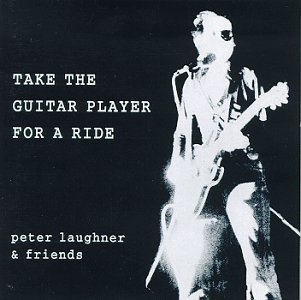
Peter Laughner Take the Guitar Player for a Ride
Tim/Kerr Records put out this collection of unreleased material from Pere Ubu founder Peter Laughner back in 1994, 17 years after the guitarist's death. A seminal figure in the Cleveland proto-punk scene, Take the Guitar Player for a Ride consists mostly of demos Laughner recorded himself though there is some material from his various bands including the pre-Ubu/Dead Boys outfit Rocket From the Tombs as well as short-lived acts like Friction and the Finns. If your interest in piqued Handsome Productions has a lot of biographical material (including Lester Bangs' obituary) as well as many CDs for sale of concert and demo recordings from Laughner's career. (I can't speak for the sound quality on any of them though.) And of course, Pere Ubu's early recordings and the Rocket From The Tombs collection The Day the Earth Met Rocket from the Tombs are highly recommended.

Download Peter Laughner Take the Guitar Player for a Ride